
Wylde Blogs
CBD Tattoo Aftercare UK 2026: Why British Studios Are Swapping Bepanthen for CBD Balms — and the 5 Checks Before You Buy
British tattoo studios have spent decades handing clients a tube of Bepanthen and a vague instruction to “keep it moisturised.” In 2026, that single-product approach is giving way to staged aftercare, fragrance-free formulas and a small but growing place for plant-based CBD balms. It is less a trend than a rethink of what goes on fresh ink — and when.
What’s trending: aftercare becomes a protocol
The clearest signal comes from professional guidance. In May 2026, StarBrite Colors reported that the professional aftercare standard has matured into three stages: medical-grade film bandages for initial healing, plant-based balms for the first two weeks, and fragrance-free lotions for maintenance. That is a meaningful move away from one ointment for everything.
CBD is entering that sequence carefully. Cannabis Health News (UK) reports that CBD is increasingly added to aftercare balms and lotions, with its anti-inflammatory properties cited as a reason some formulators believe it may soothe the look of irritation and reduce redness. The same reporting cautions that some creams and CBD oils can irritate a fresh tattoo, so suitability must be checked first.
Why Bepanthen became the default — and why studios are moving on
Bepanthen earned its place. Its dexpanthenol — Provitamin B5 — is genuinely associated with skin repair, and generations of artists have relied on it because it is widely available, affordable and familiar. But Bepanthen is a nappy-rash ointment, not a purpose-built tattoo aftercare product. Its base is built on occlusive petrolatum, paraffin and lanolin. On fresh ink, that layer can trap heat and sweat, make over-application likely, and it is not vegan. As UK brand Stories & Ink has pointed out, those are not trivial details when the skin barrier is open.
This is not a case of studios declaring war on a cream many artists still rate. It is a case of aftercare becoming more precise. A product acceptable for nappy rash is not automatically the best choice for a large, weeping tattoo in a warm studio in July. The 2026 question is less “Bepanthen is bad” and more “why are we still using one product for three different phases of healing?”
Why this matters: fragrance, occlusion and the six-month window
Fragrance is cited in professional guidance as the single most avoidable cause of tattoo healing complications. That is why every product applied to a healing tattoo should be fragrance-free without exception — not “lightly scented,” not “essential-oil enriched,” not “naturally fragranced.” If a balm smells like a spa, it is probably not right for fresh ink.
Occlusion is the other issue. Vaseline or pure petrolatum should never be used on new ink: it seals the tattoo from airflow, traps bacteria and moisture, and can contribute to patchy healing and fading. Full tattoo healing can take up to six months in the lower skin layers, even though the surface may look healed in about three weeks. The aftercare plan therefore needs to change as the skin changes.
Where CBD fits — and what the evidence actually says
CBD topicals are being explored for comfort and skin feel, but the evidence needs perspective. Preclinical research cited in the category includes a study where a topical CBD gel reduced joint swelling in rats with joint inflammation, with no side effects reported. That is useful context for topical CBD research, but it is not proof of a tattoo-healing benefit. It does not mean a CBD balm will make a tattoo heal faster.
What CBD balms can offer is a plant-based, petroleum-free format with rich butters and oils that may support the look and feel of comfortable, supple skin once the surface has closed. The key word is once. A fresh tattoo is an open wound. CBD balms are not a substitute for medical-grade film bandages in the initial phase, and they should not be applied to broken skin unless a qualified professional has advised otherwise. This is general information, not medical advice.
Examples: how brands are positioning CBD balms
Kind Botanicals’ CBD tattoo balm is a useful case study. It uses 500mg full-spectrum CBD with shea and mango butter, coconut and castor oil, safflower oil and vitamin E — and it is positioned for post-healing use only, once skin is closed, typically 7–10 days after the session. That is exactly the distinction the category needs: a clear line between initial wound care and later-stage skin comfort.
Hustle Butter Deluxe shows the professional market’s direction. It is 100% vegan and petroleum-free, built on shea, mango and aloe butters with coconut, sunflower and rice bran oils plus green tea, papaya and mint. In 2026 it is described as the number one balm product in the professional tattoo aftercare market, used during sessions as a glide and afterwards as aftercare. The formula logic is clear: plant-based, petroleum-free and designed for use around tattooing.
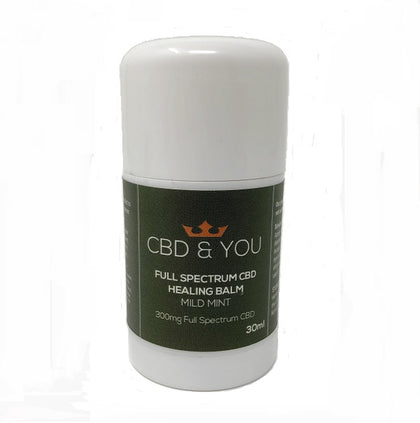
For a UK wellness routine, a product such as our Full Spectrum CBD Healing Balm can be considered once skin is fully closed, after a patch test and with your artist’s approval. It should not be used on broken skin, and it is not a replacement for the film bandage or fragrance-free lotion stages.
The 5 checks before you buy a CBD tattoo balm
- 1. Fragrance-free, without exception. Check for parfum, fragrance, essential oils and botanical extracts added for scent. A healing tattoo does not need perfume.
- 2. Timing: closed skin only. Most CBD balms are not designed for the first 7–10 days. Wait until the surface has closed and your artist has confirmed the transition.
- 3. Read the full ingredient list. Look for petroleum-free, vegan-friendly formulas with shea, mango, coconut, castor or safflower oils. Avoid occlusive petrolatum, paraffin and lanolin if you want airflow and easy application.
- 4. Check the CBD dose and transparency. A clear milligram amount — such as 500mg — and a named spectrum are good signs. Patch-test first; some creams and CBD oils can irritate fresh ink.
- 5. Patch-test and get artist approval. Apply a small amount to intact skin before using it near a tattoo. Follow your studio’s written aftercare guidance, and stop if irritation appears.
Future outlook: from trend to standard
The likely 2026 trajectory is less hype and more protocol. Studios will keep moving toward three-stage aftercare, with medical-grade film for the initial phase, plant-based balms for the first two weeks, and fragrance-free lotions for maintenance. CBD balms will find their place in the later stages — not as a miracle product, but as one option in a more thoughtful routine. Expect clearer labels, more vegan and petroleum-free formulas, and more artists asking clients to patch-test before they buy.
The British studio swap is really a maturity story. Bepanthen got people through decades of tattoos, and dexpanthenol still has a legitimate place in skin repair. But 2026 aftercare is more specific, more transparent and more willing to separate first-week wound care from month-one skin comfort. If you are buying a CBD balm for tattoo aftercare, buy it for the right stage, check the fragrance, check the base, patch-test — and let the healing timeline, not the marketing, set the schedule.