
Wylde Blogs
How to decode UK CBD product label claims in 2026: a practical consumer guide
Introduction
The UK CBD market has matured rapidly. By 2026 many product terms that once sounded reassuring—"full‑spectrum", "broad‑spectrum", "THC‑free", "hemp extract"—are used widely but with varying rigour. This guide explains what those labels mean under current UK practice, how regulation and testing shape labelling, and what practical checks you can use when buying CBD products.
Key concepts: regulation and spectrum explained
CBD and the novel foods framework
In the UK CBD extracts are classified as novel foods. That means brands selling ingestible CBD (oils, gummies, capsules, foodstuffs) should have an FSA‑validated novel food application for each product. The FSA publishes a public list of validated applications and you should check a brand or product there if you want independent confirmation that it is permitted to remain on retail shelves.
What "full‑spectrum", "broad‑spectrum" and "isolate" mean
- Full‑spectrum: the product contains a range of naturally occurring hemp compounds — cannabinoids, terpenes and other phytochemicals — and therefore can include trace amounts of THC.
- Broad‑spectrum: aims to retain other cannabinoids and terpenes while removing detectable THC. In practice the THC may be reduced below a lab’s detection limit rather than being absolutely absent.
- Isolate: essentially (near) pure CBD with other cannabinoids removed.
UK limits on controlled cannabinoids
The UK’s practical compliance yardstick is tighter than many overseas standards: regulators and many responsible manufacturers aim for no more than 1 mg total of controlled cannabinoids per retail pack. This conservative threshold helps brands remain comfortably within enforcement expectations when selling across UK retail channels.
The FSA’s 10 mg/day advisory
The FSA continues to recommend an advisory intake of 10 mg CBD per day as a reference for product design and consumer guidance. This remains advisory rather than a statutory dose limit, but it is influential: many products are formulated and marketed with serving sizes that reflect that guidance.
Details: label watchpoints and what to ask
What to look for on the label
Clear labelling is the first sign of a brand doing the basics properly. When you inspect a bottle or product page, look for:
- Total mg CBD per bottle and mg per serving (per gummy, per dropperful, etc.).
- Explicit spectrum type (full‑spectrum, broad‑spectrum, isolate) rather than vague terms like "hemp extract" alone.
- A full ingredients list — not just "hemp extract" — along with allergen or carrier oil information.
- Batch codes and a clearly accessible third‑party Certificate of Analysis (COA) matched to that batch.
Certificates of Analysis (COAs): why they matter
COAs are third‑party lab reports showing what is in a batch. Pay attention to:
- Whether the COA specifically matches the batch code printed on the packaging.
- The test panel — cannabinoids (THC, THCA, CBD, CBG etc.), solvents, pesticides and microbial testing are common checks.
- Limits of detection (LOD) and limits of quantification (LOQ) — different labs have different sensitivities. A claim like "THC‑free" is meaningless without a batch COA showing the actual non‑detect result at a stated LOD.
"THC‑free" and detection limits
"THC‑free" frequently appears on labels, but in analytical terms this usually means "below the lab’s detection limit". Because sensitivity varies between laboratories, a robust COA should state the LOD/LOQ used. If a product claims to be THC‑free, ask for the batch‑specific COA and check the detection threshold rather than taking the phrase at face value.
Topicals are cosmetics — different rules
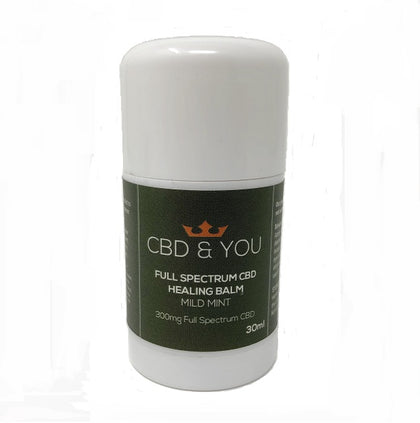
Topical CBD products (balms, creams, roll‑ons) are regulated in the UK as cosmetics. They should follow cosmetic labelling rules (INCI ingredient names), include a Responsible Person, have a Cosmetic Product Safety Report (CPSR) and display either a batch code or a Period After Opening (PAO) symbol. For example, a balm marketed as "full‑spectrum" should still provide INCI and batch information so you can verify third‑party testing if required. A topical such as the Full‑Spectrum CBD Healing Balm should carry these cosmetic assurances.
Market context: why transparency matters in 2026
Novel food applications are expensive—industry estimates often cite costs in the range of £250k–£500k per application. That cost has driven consolidation: larger, established brands are more likely to have validated FSA applications and to publish batch COAs openly. For consumers this means brands that publish COAs and clearly show FSA application validation are generally safer bets.
Practical consumer checklist
- Check the FSA public list for validated novel food applications if the product is ingestible.
- Confirm total mg CBD per bottle and mg per serving—this helps you follow the FSA’s 10 mg/day advisory.
- Ask for a batch‑specific COA; verify the batch code on the bottle matches the COA.
- Check the COA’s LOD/LOQ for THC to understand what "THC‑free" really means.
- For topicals, look for INCI labelling, a Responsible Person, a CPSR and a batch code or PAO symbol.
- Prefer brands that publish COAs and show evidence of validated FSA applications — established names often carry that transparency.
Examples: for clear per‑serving labelling, many people find microdosed gummies useful — compare serving sizes on products such as Wylde CBD Gummy Bears 30x (10 mg each) and Wylde CBD Gummy Bears 60x (10 mg each). If you prefer an oil labelled 0% THC, check a product like the CBD Living Tincture 4500 mg (0% THC) for its batch COA and LOD information. For full‑spectrum oral oils see the cold‑pressed options such as the Wylde Natural Cold‑Pressed Drops 1000 mg and confirm COAs and serving guidance before purchase.
Conclusion
Decoding CBD labels in 2026 is mostly about transparency: a clear spectrum declaration, accurate mg per serving, batch codes and accessible, batch‑matched COAs. Remember the novel food status of ingestible CBD and the FSA’s 10 mg/day advisory — these shape how reputable products are formulated and labelled. When in doubt, ask for the COA and check that it matches the bottle. That simple habit separates confident purchases from uncertain ones.